


Which Is the Most Effective Pigmentation Treatment? PicoSure vs Fotona StarWalker vs IPL vs Peels
Pigmentation can look simple on the surface, but the right solution depends on what is happening inside the skin. At BalaBala Laser Clinic in Adelaide, the best treatment for pigmentation is selected after assessing the pigment type, depth, trigger, skin tone, and treatment history—not by using a one-size-fits-all package. The goal is not simply to ‘remove pigment’, but to understand why it appeared and choose a treatment pathway that supports clearer, more even-looking skin with realistic expectations.
Quick Answer: What Is the Best Treatment for Pigmentation?
There is no single best treatment for pigmentation for every person. However, advanced laser treatments such as PicoSure and Fotona StarWalker are often considered first-line options at BalaBala Laser Clinic for many sun spots, freckles, solar lentigines, and age spots, especially when pigment is well-defined.
The ideal option depends on whether the concern is freckles, solar lentigines/age spots, melasma, post-inflammatory marks, uneven pigmentation, or mixed skin pigmentation.
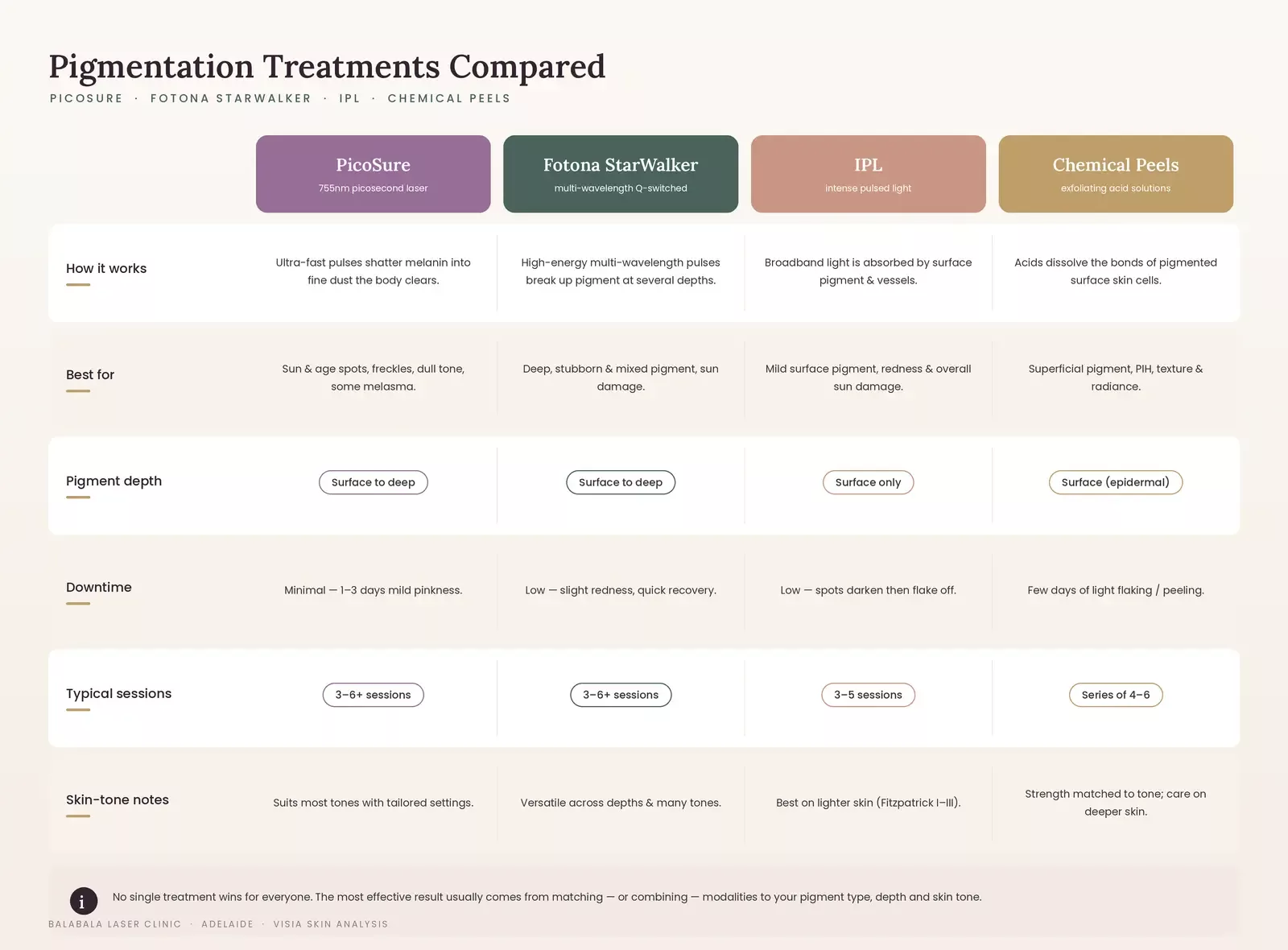
- PicoSure: may be suitable for freckles, flat spots, dark spots and selected sun damage.
- Fotona StarWalker: suited to deeper, mixed, or more resistant pigment.
- Intense Pulsed Light (IPL): useful for diffuse sun damage, redness, and uneven skin tone.
- Chemical peels: helpful for dullness, dead skin cells, and very superficial discoloration.
Every treatment plan at BalaBala begins with a medical consultation and VISIA skin analysis.
Why There Is No Single Best Pigmentation Treatment
The best treatment for pigmentation depends on the cause, type, depth, and location of pigmentation, as well as skin colour, sensitivity, family history, and medical background. Hyperpigmentation is a common skin condition characterised by patches or spots darker than surrounding areas, often triggered by factors such as sun exposure, hormonal changes, and skin inflammation.
Common types include:
- freckles
- sun damage and solar lentigines
- age spots
- melasma
- post-inflammatory hyperpigmentation after acne, burns, or skin injury
- mixed-pattern pigmentation changes
Sunspots or age spots develop on areas frequently exposed to the sun due to accumulated sun exposure triggering melanin production, more common in adults over 50. Post-inflammatory hyperpigmentation occurs when skin darkens after injury or inflammation, leaving marks that may fade but sometimes persist.
Pigment in the epidermis often responds faster to peels, IPL, or PicoSure laser therapy. Dermal or mixed pigment may need deeper laser energy. Darker or sensitive skin types have a higher risk of redness or pigment changes, so treatment settings are carefully customised.
Melasma differs as a chronic, trigger-sensitive condition influenced by UV, visible light, heat, hormones, and inflammation. It requires conservative treatment planning and management rather than a permanent cure. Pregnancy, hormonal contraceptives, medications, and skin history are reviewed before treatments. Any changing lesion should be checked by a dermatologist before cosmetic treatment.
PicoSure (picosecond laser)for Pigmentation
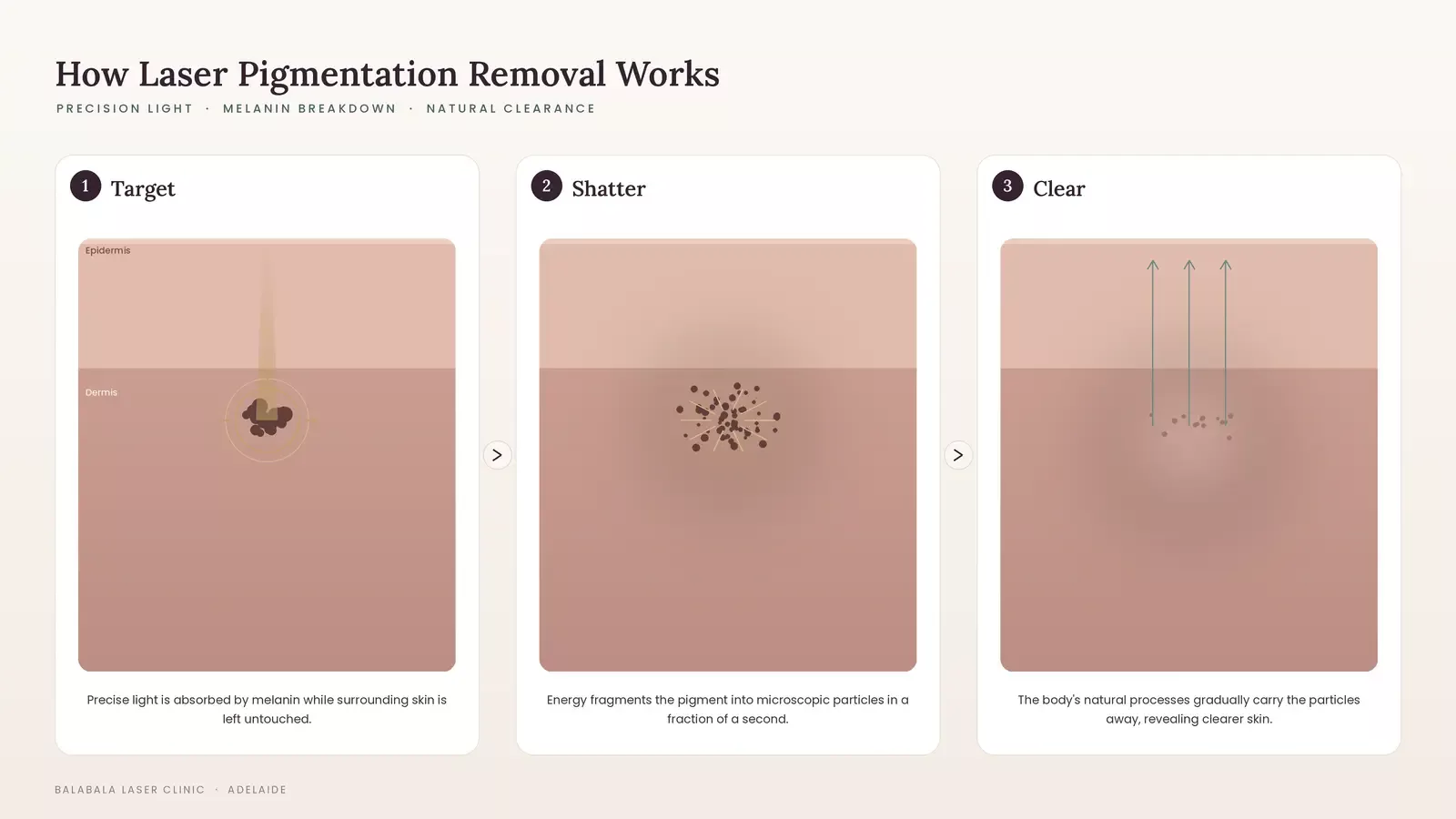
PicoSure is a picosecond laser delivering ultra-short pulses to break pigment into tiny particles while minimising heat to surrounding skin. It targets melanin clusters in freckles, sun spots, some age spots, and selected post-inflammatory marks. The body gradually clears fragmented pigment.
At BalaBala, PicoSure is commonly used for benign pigment on the face, neck, décolletage, hands, and selected body areas. Compared with some older laser approaches, picosecond technology may allow more efficient pigment targeting in selected cases. Benefits may include brighter skin tone, refined texture, and collagen support. Treatments are performed by Registered Nurses or medical practitioners using medical-grade protocols.
PicoSure may be suitable for many pigment concerns but is not always ideal alone for melasma or very deep pigment. Suitability and settings are assessed case by case.
Fotona StarWalker for Deeper Pigment
Fotona StarWalker is a multi-wavelength laser platform with 532 nm, 585 nm, 650 nm, and 1064 nm options to address pigment at different depths.
At BalaBala, StarWalker is selected for deeper sun damage, solar lentigines on face and body, resistant freckles, mixed epidermal-dermal pigment, and complex pigment patterns. It is especially useful when pigmentation has not responded well to simpler treatments.
StarWalker may be selected when pigment is deeper or mixed, larger areas require treatment, previous treatments had limited effect, or safer wavelengths are needed for darker skin types.
Patch testing, pigment-inhibiting skincare, sun avoidance, and careful settings are essential. StarWalker is part of BalaBala’s tailored laser options for personalised care.
IPL for Pigmentation
Intense Pulsed Light (IPL) uses broad-spectrum light rather than a laser beam. IPL may help diffuse sun damage, mild sun spots, redness, and uneven skin tone, especially where brown and red changes coexist.
Benefits include treating larger areas quickly and improving skin clarity with usually modest downtime such as temporary redness or darkening before spots flake.
Limitations include less precision than PicoSure or StarWalker and lower effectiveness for deep pigment. IPL is not usually the strongest option for melasma or higher Fitzpatrick skin types. At BalaBala, IPL is used when superficial sun damage and vascular changes are the main concern. Careful skin typing and test spots reduce risks.
Chemical Peels for Pigmentation
Chemical peels involve controlled exfoliation using acids like glycolic, lactic, salicylic, or mandelic acid. Medical-grade peels promote rapid skin cell renewal and may help improve superficial pigmentation, dullness, and early pigmentation changes.
Peels may be preferred for mild uneven tone, sun-induced dullness, texture improvement, and glow. They may be avoided or delayed with active infection, recent sunburn, poor barrier function, or high pigmentation risk. Sensitive and darker skin often requires pre-conditioning. Conservative protocols may be recommended.
Skincare for Pigmentation Control
Home skincare plays an important role in managing pigmentation and maintaining results after laser, IPL, or peel treatments. At BalaBala Laser Clinic, our general home-care advice focuses on protecting the skin from further pigment triggers and supporting the skin barrier.
Daily sunscreen is essential, both indoors and outdoors. UV exposure can pass through windows and quickly restart melanin production, so broad-spectrum SPF 50+ should be used consistently every day. Protective clothing and avoiding peak UV rays are also recommended.
Antioxidant protection is important. Vitamin C skincare may help brighten uneven skin tone while supporting the skin against environmental stress. A gentle, barrier-supporting routine can reduce irritation and improve tolerance to in-clinic treatments.
We generally recommend avoiding harsh scrubs, strong exfoliating acids, or unapproved bleaching products, as irritation can increase rebound pigmentation risk. Pigment-control products such as kojic acid may be recommended by the clinic when appropriate, depending on your skin type, pigment type, sensitivity, and treatment history.
Glutathione IV Therapy for Pigmentation Support
Glutathione IV Therapy, often combined with Vitamin C, may be considered as a supportive option for clients concerned with dullness, uneven skin tone, and pigmentation-prone skin. Glutathione is an antioxidant that can support the body’s response to oxidative stress, while Vitamin C provides additional antioxidant support and may promote a brighter-looking complexion.
At BalaBala Laser Clinic, Glutathione IV Therapy is not a replacement for laser pigmentation treatments. For visible sun spots, freckles, age spots, melasma, or post-inflammatory hyperpigmentation, treatments such as PicoSure, Fotona StarWalker, IPL, peels, and personalised skincare may still be required.
IV therapy may be part of a broader skin-brightening and wellness plan when clinically appropriate. Suitability is assessed during consultation, and results vary between individuals.
Combination Therapy for Better Pigmentation Results
Improvement often comes from combining pigmentation-specific treatments and skincare. Common combinations at BalaBala include:
- PicoSure or Fotona StarWalker for targeted pigment reduction
- IPL for selected superficial sun damage or diffuse redness and pigment
- Selected chemical peels for superficial pigment and dullness
- Personalised skincare for maintenance and pigment control
- Glutathione IV Therapy with Vitamin C as supportive antioxidant and brightening care when clinically appropriate
Combination therapy allows for conservative treatment settings, gradual progress, and better management of downtime. Treatment plans are customised and reviewed regularly to track results.
Treatment for Melasma
Melasma is a chronic, trigger-sensitive pigmentation condition influenced by UV, visible light, heat, hormones, and inflammation. It appears as large, blotchy patches on the face and is more common in women.
Melasma requires conservative, staged treatment planning focused on control rather than cure. This may include:
- Strict sun protection, pigment-inhibiting skincare, and skin barrier support
- Careful, low-energy laser therapy or gentle peels when appropriate
- Ongoing maintenance with sunscreen, topical treatments, and regular review
Aggressive or indiscriminate treatments may worsen melasma. BalaBala’s approach emphasises realistic expectations and personalised care.
How BalaBala Chooses the Right Pigmentation Treatment?
Every pigmentation journey at BalaBala Laser Clinic in Adelaide starts with a 30-minute personalised consultation and VISIA skin analysis. Identifying the trigger for pigmentation, such as sun damage or hormonal changes, is crucial for selecting the appropriate treatment.
Your assessment includes:
- Onset of pigmentation, sun habits, hormonal history, medications, and previous treatments
- VISIA imaging for visible and underlying sun damage, age spots, pores, and redness
- Fitzpatrick skin typing and pigment risk assessment
- Review of skin sensitivity, acne, and current skincare
- Planning around budget, downtime, events, and long-term goals
BalaBala’s medical team then selects from PicoSure, Fotona StarWalker, IPL, chemical peels, personalised skincare, and Glutathione IV Therapy when appropriate. If skin laxity, wrinkles, or texture concerns are also present, a separate anti-ageing consultation may be recommended.

Book a Pigmentation Assessment
If you are seeking pigmentation treatment in Adelaide, book a skin analysis at BalaBala Laser Clinic. We assess freckles, sun damage, age spots, melasma, post-inflammatory hyperpigmentation, dark spots, and broader skin concerns across the face, neck, décolletage, hands, shoulders, and body.
With over 10 years of experience, medical-grade equipment, and a focus on clearer, healthier-looking skin with realistic treatment planning and maintenance support, BalaBala Laser Clinic provides personalised care for your pigmentation concerns. learn more about our pigmentation removal treatment.
Frequently Asked Questions
Q: What is the best treatment for pigmentation?
A: There is no single best treatment for every pigmentation concern. The right option depends on whether the pigment is sun damage, freckles, age spots, melasma, post-inflammatory hyperpigmentation or mixed pigmentation.
Q: Is PicoSure better than IPL for pigmentation?
A: PicoSure may be more suitable for selected defined pigment such as freckles, sun spots and age spots, while IPL may be more suitable for diffuse sun damage, redness and uneven tone. Suitability depends on pigment depth and skin type.
Q: Is Fotona StarWalker good for deeper pigmentation?
A: Fotona StarWalker may be considered for deeper, mixed or more resistant pigmentation because it offers different wavelengths and treatment modes. A consultation is needed to assess suitability.
Q: Are chemical peels good for pigmentation?
A: Chemical peels may help superficial pigmentation, dullness and uneven tone by supporting skin renewal. They may not be suitable for deeper pigment or melasma without careful assessment.
Q: Can melasma be permanently removed?
A: Melasma is usually managed rather than permanently cured. It can recur with UV exposure, heat, hormones and inflammation, so maintenance and sun protection are important.
Q: How many pigmentation treatments will I need?
A: The number of treatments depends on pigment type, depth, skin tone, treatment method and aftercare. Some sun spots may improve in fewer sessions, while melasma or post-inflammatory pigmentation usually requires a longer plan.
Q: Can pigmentation come back after treatment?
A: Yes. Pigmentation can recur if triggers such as UV exposure, heat, hormones or inflammation continue. Daily SPF and maintenance skincare are important.
Q: Is Glutathione IV Therapy a replacement for laser pigmentation treatment?
A: No. Glutathione IV Therapy with Vitamin C may support antioxidant protection and a brighter-looking complexion, but it does not replace PicoSure, Fotona StarWalker, IPL, peels or personalised skincare for visible pigmentation.