


RF Microneedling vs Fractional Laser for Acne Scars: Which Is Better for Your Skin?
RF microneedling and fractional laser resurfacing are two of the most frequently compared treatments for acne scars, enlarged-looking pores and uneven skin texture. Both are designed to trigger controlled repair and collagen remodelling, but they do not deliver energy in the same way and they do not create the same type of recovery.
At BalaBala Laser Clinic in Adelaide, this comparison usually means Vivace RF Microneedling versus Fotona Fractional Er:YAG Laser Resurfacing. The more useful question is not “Which machine is stronger?” It is “Which treatment mechanism best matches the structure of the concern, the person’s skin and the level of recovery they can safely manage?”
The Short Answer
Neither RF microneedling nor fractional laser is universally better for acne scars.
RF microneedling delivers radiofrequency heat through fine needles at selected dermal depths while limiting unnecessary surface injury. It may be considered when the main goals are collagen remodelling, rolling or shallow boxcar-type texture, enlarged-looking pores, or a lower-surface-injury approach for pigment-prone skin.
Fractional Er:YAG laser creates controlled microscopic treatment columns from the skin surface. It may be considered when surface roughness, sharply defined shallow depressions, pore appearance or visible textural edges are important parts of the problem and the person can accommodate a more obvious healing phase.
Deep ice-pick scars and strongly tethered rolling scars may not respond adequately to either device alone. They can require focal medical procedures or subcision from an appropriately qualified provider. Flat red or brown post-acne marks also require separate assessment because colour is not the same as scar depth.
RF Microneedling vs Fractional Laser: Quick Comparison
Decision factor | Vivace RF Microneedling | Fotona Fractional Er:YAG Resurfacing |
How energy is delivered | Fine needles enter selected depths and release RF heat within the skin | Er:YAG laser creates fractional microscopic treatment columns from the surface |
Main structural emphasis | Dermal heating and collagen remodelling with less surface ablation | Surface renewal plus controlled collagen remodelling |
Concerns that may suit it | Selected rolling or shallow boxcar scars, enlarged-looking pores, general texture and mild laxity | Selected shallow boxcar scars, rough texture, visible scar edges, pores and superficial textural irregularity |
Skin-surface effect | Microchannels with relatively limited surface disruption | Fractional removal or vaporisation of microscopic surface columns |
Typical visible recovery | Redness, warmth, mild swelling or a rough feeling for a few days, depending on settings and response | Redness, swelling, flaking or light crusting for several days, depending on depth, density and response |
Pigment considerations | May reduce unnecessary epidermal heating, but PIH and other complications remain possible | PIH risk requires particular care in pigment-prone or deeper skin tones; conservative settings and preparation may be needed |
Does it release tethering? | No | No |
Does it reliably remove deep ice-pick scars? | No | No |
Can it be combined with other care? | Sometimes, as part of a staged plan | Sometimes, as part of a staged plan |
This table is a treatment-planning guide, not a substitute for assessment. Device settings, scar depth, active acne, previous reactions, skin tone, medication history and aftercare can all change the risk-benefit balance.
What Is Vivace RF Microneedling?
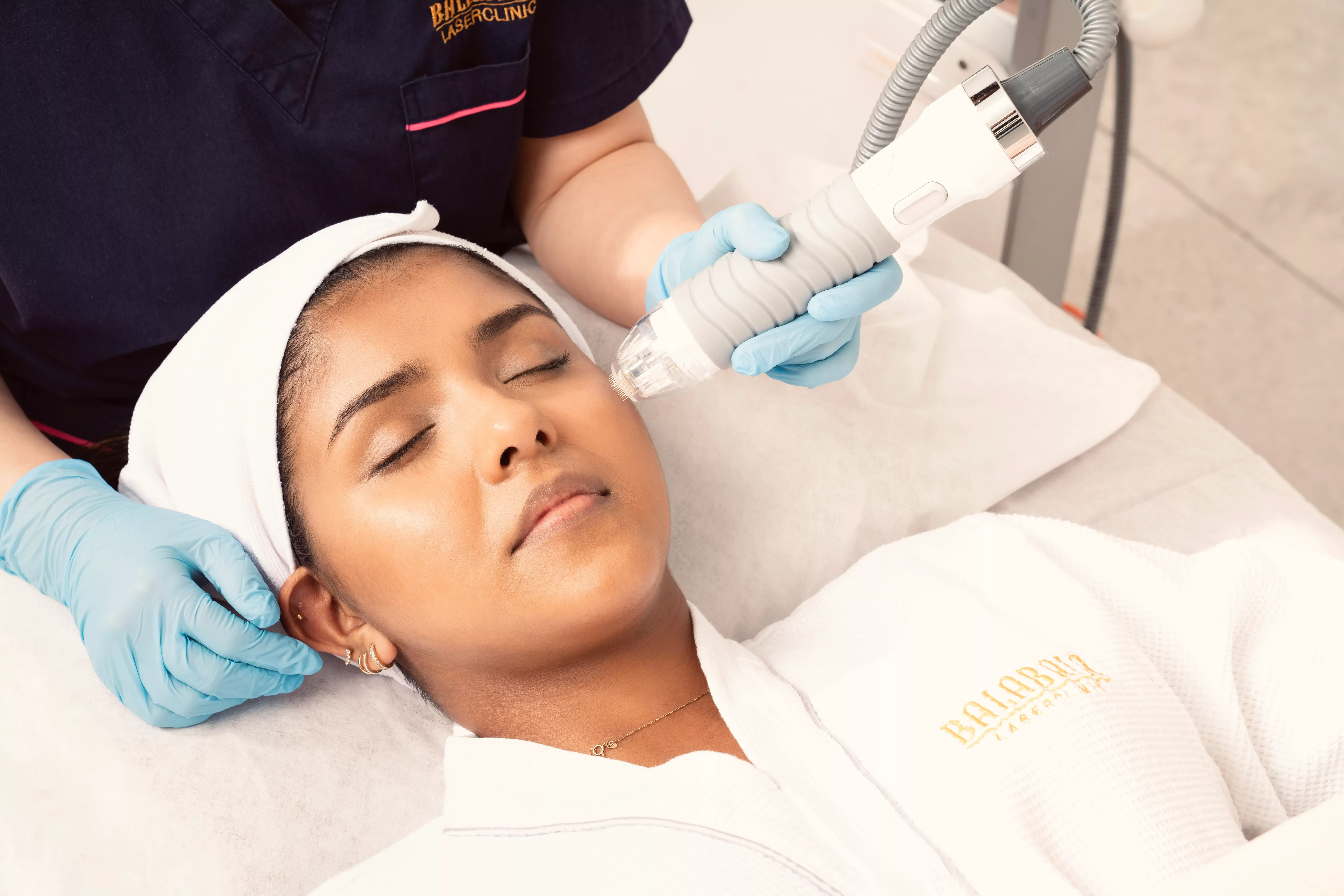
RF microneedling editorial concept. AI-assisted image; not a BalaBala patient, actual procedure or treatment result.
Vivace combines microneedling with radiofrequency energy. Fine, insulated needles create controlled channels and deliver heat at selected depths beneath the surface. The treatment is intended to stimulate the wound-healing response and support new collagen and elastin formation.
The ability to adjust depth and energy can be useful when scars are not uniform. A practitioner may use different settings across the cheeks, temples or jawline rather than treating the entire face identically. Vivace also includes LED as part of its treatment system, but the acne-scar decision should still be based mainly on structure, depth, skin condition and healing risk.
RF microneedling does not mechanically release fibrous bands beneath a tethered rolling scar. It also does not physically remove a deep, narrow ice-pick tract. These limitations matter because a device can improve the surrounding texture without correcting the feature that creates the deepest shadow.
What Is Fotona Fractional Er:YAG Laser Resurfacing?
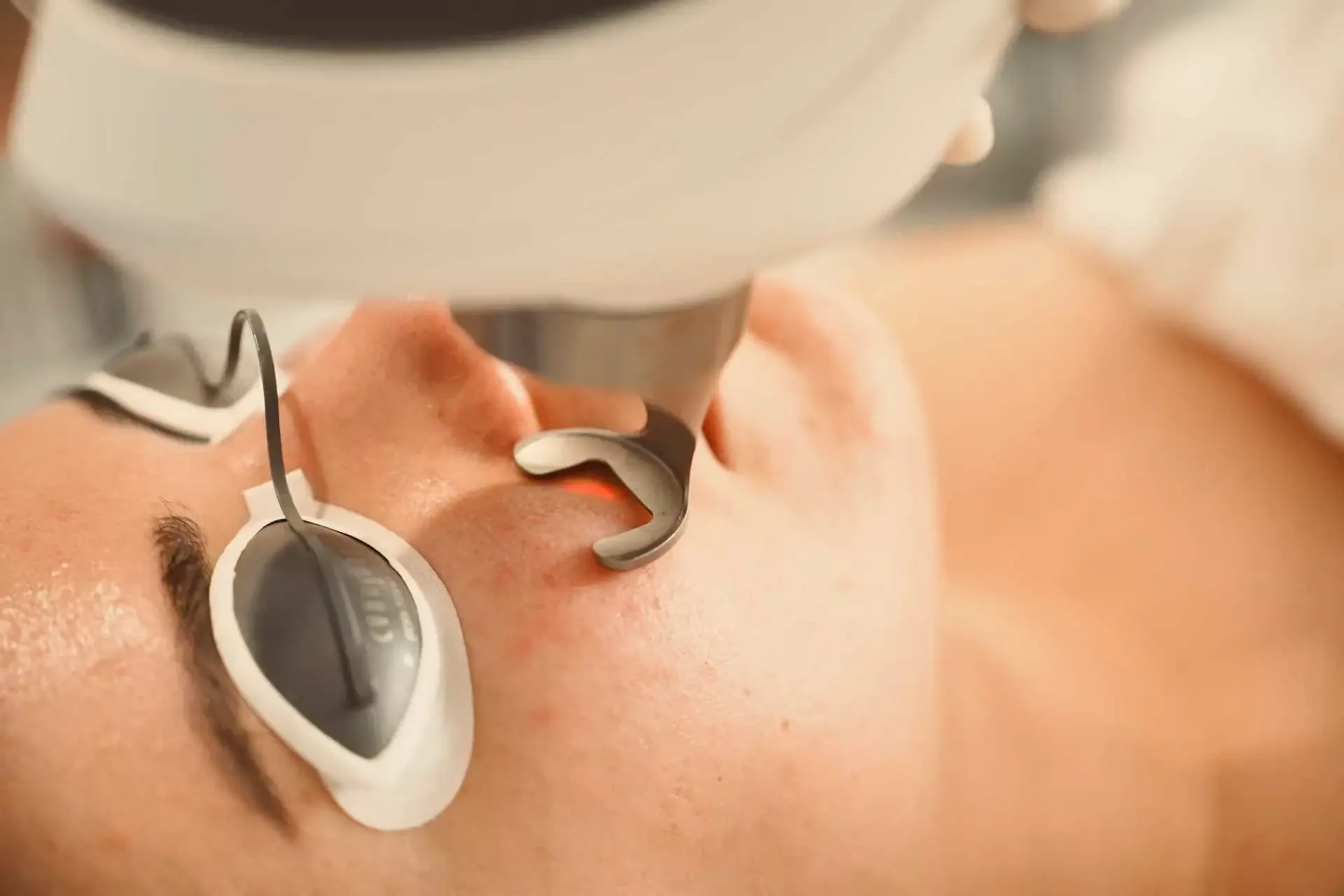
Fractional Er:YAG resurfacing editorial concept. AI-assisted image; not a BalaBala patient, actual procedure or treatment result.
Fotona fractional resurfacing uses a 2,940 nm Er:YAG wavelength that is strongly absorbed by water in the skin. Rather than removing the entire surface, fractional delivery creates microscopic treated columns separated by areas of untreated skin. This pattern supports re-epithelialisation while stimulating a controlled repair response.
Because fractional Er:YAG acts from the surface, it can be useful when roughness, shallow scar edges and uneven texture are visually important. Treatment depth and density can be adjusted, but increasing intensity can also increase redness, swelling, flaking, crusting and pigment risk.
Fotona fractional resurfacing should not be confused with BalaBala’s non-ablative laser rejuvenation or its separate Fotona Acne Revision treatment for active inflammatory acne. Different Fotona modes use different wavelengths, targets and treatment goals.
Which Treatment Is Better for Rolling Acne Scars?
Rolling scars are broad, wave-like depressions with sloping edges. Some are caused partly by fibrous bands that tether the skin to deeper tissue.
RF microneedling may support dermal collagen remodelling around selected rolling scars and can be useful when pore appearance or general texture is also a concern. Fractional Er:YAG may improve surface unevenness around a rolling pattern. However, neither device releases a strong fibrous attachment.
If the depression lifts when the surrounding skin is stretched, tethering may be contributing. Significant tethering can require subcision by an appropriately qualified medical provider. In that situation, choosing between RF and laser without addressing the deeper attachment may lead to limited change.
Which Treatment Is Better for Boxcar Acne Scars?
Boxcar scars are round or oval depressions with more defined edges. Their depth varies considerably.
Shallow boxcar scars may respond to either RF microneedling or fractional Er:YAG resurfacing. Fractional resurfacing can be helpful when the visible edge and surface transition are important, while RF microneedling can support collagen remodelling beneath a broader shallow depression. Skin tone, downtime tolerance and previous response may influence the choice as much as the scar label.
Deep boxcar scars with steep walls are less predictable. A device-based course should not be presented as guaranteed removal, and selected scars may need medical techniques outside BalaBala’s service scope.
Which Treatment Is Better for Ice-Pick Scars?
Ice-pick scars are narrow at the surface but extend more deeply than their opening suggests. This geometry makes them difficult to treat with broad resurfacing or RF microneedling alone.
Either device may improve surrounding texture in a mixed-scar pattern, but deep ice-pick scars often need a focal approach such as TCA CROSS or a punch technique from an appropriately qualified medical provider. BalaBala should refer when the dominant problem is unlikely to respond adequately to the available in-clinic technologies.
For a detailed explanation of these scar patterns, read Ice Pick, Boxcar and Rolling Acne Scars: Why Treatment Must Match the Scar Type.
What About Enlarged Pores and Uneven Texture?
Enlarged-looking pores are visible follicular openings, not holes that can be permanently closed. They may look more obvious when oil activity is high, the surrounding skin is uneven or collagen support has changed.
Both Vivace and Fotona fractional resurfacing may improve the appearance of pores and texture in selected clients. RF microneedling emphasises controlled dermal heating, while fractional Er:YAG adds a more direct surface-renewal effect. Neither treatment permanently removes pores, and photographs alone cannot determine which mechanism is appropriate.
Is RF Microneedling Safer Than Laser for Darker Skin?
RF microneedling is often considered when a person has pigment-prone skin because energy can be delivered beneath the surface with relatively limited epidermal heating. That does not make it risk-free or automatically suitable for everyone. Post-inflammatory hyperpigmentation, burns, infection, prolonged redness and scarring are still possible if treatment is poorly selected or delivered too aggressively.
Fractional Er:YAG can also be used in selected deeper skin tones, but pigment risk requires careful assessment. Fitzpatrick skin type, recent tanning, existing PIH, active inflammation, previous reactions, treatment density, depth and aftercare all matter. A conservative plan may include skin preparation, a lower test area or lower treatment density, longer intervals and stricter UV protection.
The correct message is not “RF is safe and laser is unsafe”. The correct message is that the treatment plan, energy delivery, settings and healing environment need to match the individual.
Which Has Less Downtime?
RF microneedling usually creates less visible surface recovery than ablative fractional resurfacing. Temporary redness, warmth, pinpoint swelling, sensitivity or a dry, rough texture may occur. The duration varies with settings, treatment area and individual response.
Fractional Er:YAG resurfacing usually produces a more visible healing phase because microscopic columns are treated from the surface. Redness, swelling, flaking, dryness or light crusting may occur for several days. Higher settings can require a longer recovery window.
“Minimal downtime” should not be interpreted as “no biological healing”. Even when the skin looks calm, barrier function and inflammation may still be changing. Exercise, heat, swimming, active skincare and direct sun may need to be paused according to the clinic’s individual instructions.
Which Treatment Hurts More?
Discomfort varies with the device, depth, energy, treatment area, numbing protocol and individual sensitivity. Both treatments can feel uncomfortable. RF microneedling may feel like repeated pressure, heat or sharp pulses. Fractional Er:YAG may feel hot, prickly or stinging.
Published head-to-head studies do not produce one universal pain result. A small randomised study comparing fractional Er:YAG and RF microneedling found RF better tolerated overall, while another trial comparing fractional CO2 laser with microneedle RF found RF more painful even though its early skin reaction was less pronounced. These findings involve different devices and settings, which is why clinic-specific assessment is more useful than a generic pain ranking.
What Does the Clinical Evidence Show?
Direct evidence comparing RF microneedling with Fotona-style fractional Er:YAG is limited, and most studies are small.
A randomised split-face study of 21 people compared 2,940 nm fractional Er:YAG with microneedling radiofrequency over four monthly sessions. Both sides improved clinically, with no significant difference in the main clinical comparison; RF microneedling had lower downtime and fewer side effects in that study.
Another split-face trial comparing fractional CO2 laser with microneedle RF found similar texture improvement after one treatment. Fractional CO2 produced more intense early redness and surface disruption, while RF was reported as more painful. CO2 is not the same laser as BalaBala’s Er:YAG system, so those recovery findings should not be transferred directly to Fotona settings.
A 2023 randomised split-face study in 23 Korean participants reported greater improvement when fractional microneedle RF was combined with ablative fractional laser than with laser alone. The study supports the logic of staged multimodal care in selected cases, but its small sample does not prove that every client needs both treatments.
Overall, the evidence supports individualised selection. Scar type, device parameters, skin tone and treatment intensity vary substantially across studies, and a published average cannot predict one person’s result.
Can Vivace and Fotona Be Used in the Same Treatment Plan?
Sometimes. A staged plan may use different treatments to address different parts of a mixed problem. For example, RF microneedling may be selected for dermal remodelling and pore-related texture, while fractional Er:YAG may later be used for surface refinement.
Using two technologies is not automatically better. The skin needs enough time to heal, and each added treatment adds cost, downtime and risk. Progress should be reviewed before another modality is introduced. A combination plan should have a clear reason rather than being offered as a larger package by default.
Should Active Acne Be Controlled First?
Usually, yes. Needling or resurfacing across uncontrolled inflammatory lesions can increase irritation, infection risk and the likelihood of new post-inflammatory colour change. Continuing breakouts can also create new scars while older scars are being treated.
BalaBala separates active inflammatory acne from established scarring. Fotona Acne Revision, skincare, medical acne treatment or another acne-management pathway may need to come before scar resurfacing. Severe, painful, nodulocystic or rapidly worsening acne should be medically assessed.
How Does BalaBala Choose Between Vivace and Fotona?
Consultation and skin-analysis editorial concept. AI-assisted image; not a BalaBala patient or diagnostic result.
A useful acne-scar consultation answers several questions before a device is selected:
- Is acne still active, infected or medically uncontrolled?
- Are the visible changes true depressions, enlarged pores, flat redness, flat pigment or a mixture?
- Are the scars mainly rolling, boxcar, ice-pick or raised?
- Is there visible or palpable tethering?
- What is the person’s Fitzpatrick skin type and history of PIH, keloids or poor healing?
- How much surface recovery can the person realistically manage?
- Which treatment mechanism directly addresses the dominant concern?
- Is referral more appropriate than an in-clinic device?
BalaBala may use VISIA Skin Analysis to document redness, pigmentation, pores and surface features under consistent conditions. VISIA supports assessment and progress documentation, but it does not replace hands-on clinical judgement or diagnose scar tethering.
Preparing for Either Treatment
The clinic’s individual instructions take priority. General preparation may include:
- control active acne and avoid picking or squeezing;
- disclose prescription acne treatment, retinoids, recent procedures, cold-sore history, pregnancy or breastfeeding, medications and previous adverse reactions;
- avoid tanning, sunburn and significant unprotected UV exposure;
- pause irritating skincare only when instructed;
- plan recovery time before important events; and
- arrive with intact skin and no active infection in the treatment area.
Aftercare and Adelaide UV Exposure
Adelaide’s high UV exposure can increase inflammation and post-inflammatory pigment risk during recovery. Follow the clinic’s procedure-specific instructions rather than combining generic advice from several sources.
Common principles include gentle cleansing, a simple moisturiser, broad-spectrum SPF 50+, shade and physical sun protection. Avoid picking, scratching or removing flakes and crusts. Heat, intense exercise, swimming, saunas, exfoliants, retinoids, acids and other active products may need to be paused for the period advised.
Contact the clinic promptly if pain, swelling, blistering, spreading redness, discharge, crusting or colour change is more severe than expected. Seek urgent medical care for severe symptoms or signs of infection.
What Results Are Realistic?
Acne-scar treatment aims for improvement, not complete erasure. Results depend on scar structure, depth, skin type, healing response, treatment intensity, aftercare and whether other procedures are needed.
Collagen remodelling develops gradually. Early swelling can temporarily make texture appear smoother, so final assessment should not be based on the first few days. A responsible plan includes standardised photographs, review points and the option to change direction when the response does not justify repeating the same treatment.
Frequently Asked Questions
Is laser better than RF microneedling for acne scars?
Not for every person or scar. Fractional Er:YAG may suit selected surface texture and shallow defined edges, while RF microneedling may suit selected rolling or shallow boxcar texture, pores and clients who need less surface disruption. Deep, narrow or tethered scars may need other procedures.
Is Vivace the same as normal microneedling?
No. Vivace combines microneedling with controlled radiofrequency energy delivered at selected depths. Traditional microneedling creates mechanical channels without RF heating.
Is Fotona fractional laser the same as CO2 laser?
No. BalaBala’s fractional resurfacing uses Er:YAG. CO2 and Er:YAG are both ablative laser categories, but their wavelengths, water absorption, tissue effects, settings and recovery profiles differ.
Which is better for darker skin: Vivace or Fotona?
There is no automatic answer. RF microneedling can limit unnecessary surface heating and is often considered for pigment-prone skin, but it is not risk-free. Fractional Er:YAG may also be used in selected cases with conservative planning. Skin type, PIH history, tanning, settings and aftercare all need assessment.
Which is better for enlarged pores?
Both may improve the appearance of enlarged-looking pores in selected clients. Vivace emphasises dermal heating and collagen remodelling; Fotona adds fractional surface renewal. Pores cannot be permanently closed, and the surrounding skin condition influences which option is more logical.
How many sessions will I need?
There is no reliable number based on a photograph or treatment name alone. Many plans begin with a short course and a review, but scar depth, settings, healing response and combination needs can change the number and spacing of treatments.
Can RF microneedling and fractional laser remove acne scars completely?
No treatment can guarantee complete removal. Appropriate care may soften edges, reduce shadowing and improve overall texture, but some scars remain visible. Deep ice-pick scars, deep boxcar scars and tethered rolling scars may need medical procedures outside BalaBala’s service scope.
Can I have treatment if I still have breakouts?
Active acne needs assessment first. Uncontrolled inflammation or infection can increase risk and continue creating new scars. Acne management may need to come before scar-focused treatment.
What are the risks of RF microneedling?
Expected effects can include redness, swelling, warmth, sensitivity and a rough texture. Less common complications can include infection, prolonged pigment change, burns or scarring. Read BalaBala’s guide to the risks of microneedling and discuss individual risk during consultation.
Book an Acne-Scar Consultation in Adelaide
If you are comparing Vivace RF Microneedling with Fotona Fractional Er:YAG Resurfacing, begin with the concern rather than the machine. BalaBala can assess active acne, red or brown post-acne marks, pores, scar type, tethering, skin tone and recovery tolerance before recommending an in-clinic option or referral.
Book a personalised skin consultation at BalaBala Laser Clinic in Adelaide. Your consultation can include VISIA Skin Analysis, clinical assessment, discussion of realistic outcomes, risks, recovery and alternatives.
BalaBala Laser Clinic
Shop 1/65 Grenfell Street, Adelaide SA 5000
This article provides general educational information and does not replace medical advice, diagnosis or treatment. Cosmetic procedures carry risks and results vary. Active, severe or unexplained acne, infection, raised scars, severe pain or unusual healing should be assessed by an appropriate medical professional. Treatment availability, suitability and practitioner scope must be confirmed at consultation.