

Red Acne Marks vs Brown Acne Marks: PIE, PIH and the Right Treatment in Adelaide
Why the colour and texture of a post-acne mark matter more than the label “acne scar”
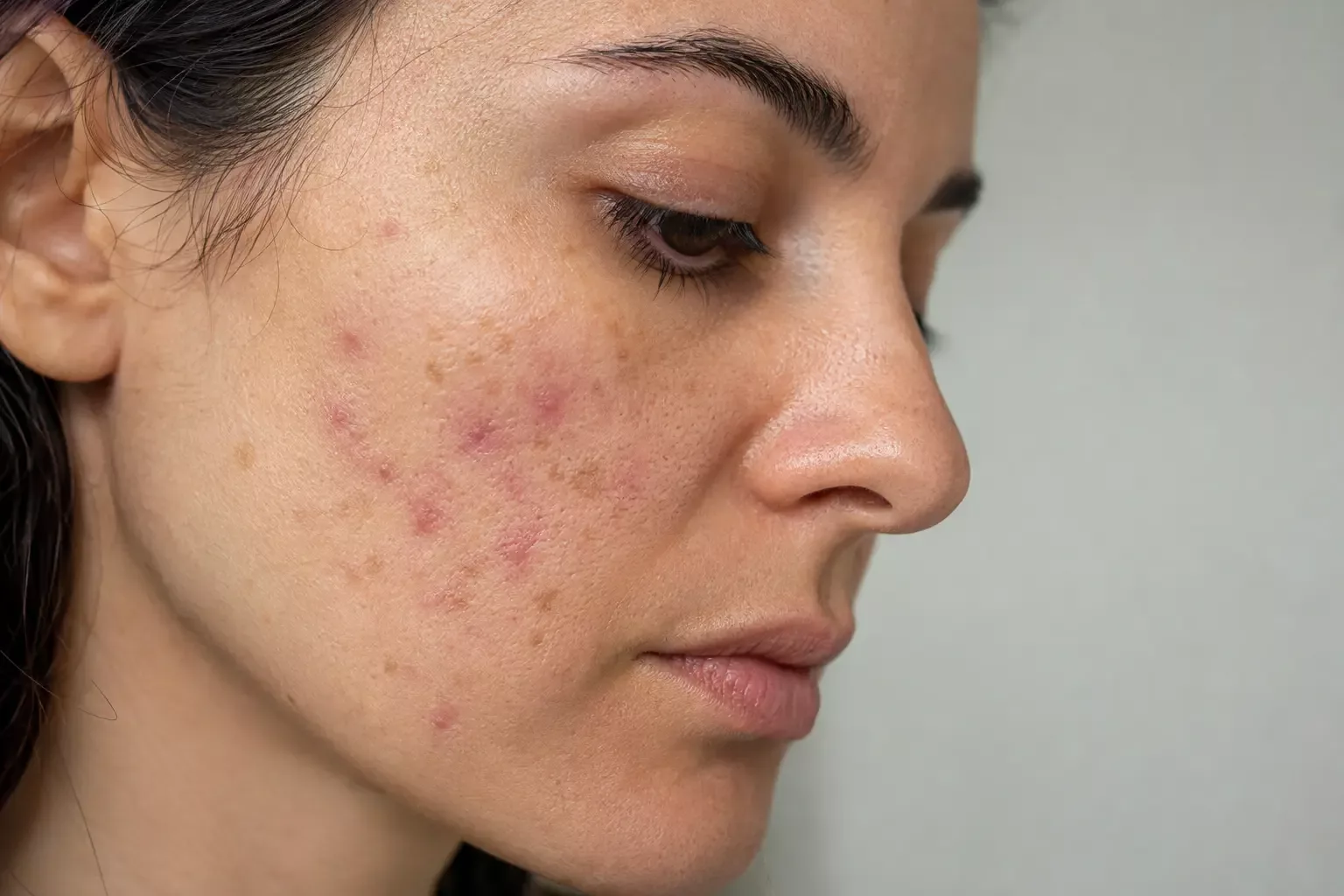
The short answer: a flat red, pink or purple mark after acne is often post-inflammatory erythema (PIE); a flat tan, brown or grey mark is more likely post-inflammatory hyperpigmentation (PIH); an indentation or raised area is a true scar. These concerns can appear together, but they do not respond to the same treatment plan. |
Key Takeaways
- PIE is mainly vascular: the mark looks red, pink or purple because inflammation has affected superficial blood vessels.
- PIH is pigment-based: inflammation has triggered excess melanin, creating tan, brown or grey marks.
- PIE and PIH are usually flat. True acne scars change the texture or contour of the skin.
- Active acne should be stabilised before focusing only on the marks it leaves behind.
- A personalised Adelaide skin assessment is important because redness, pigment and textural scarring may require different technologies, settings and timing.
That Mark After a Pimple Is Not Always an Acne Scar
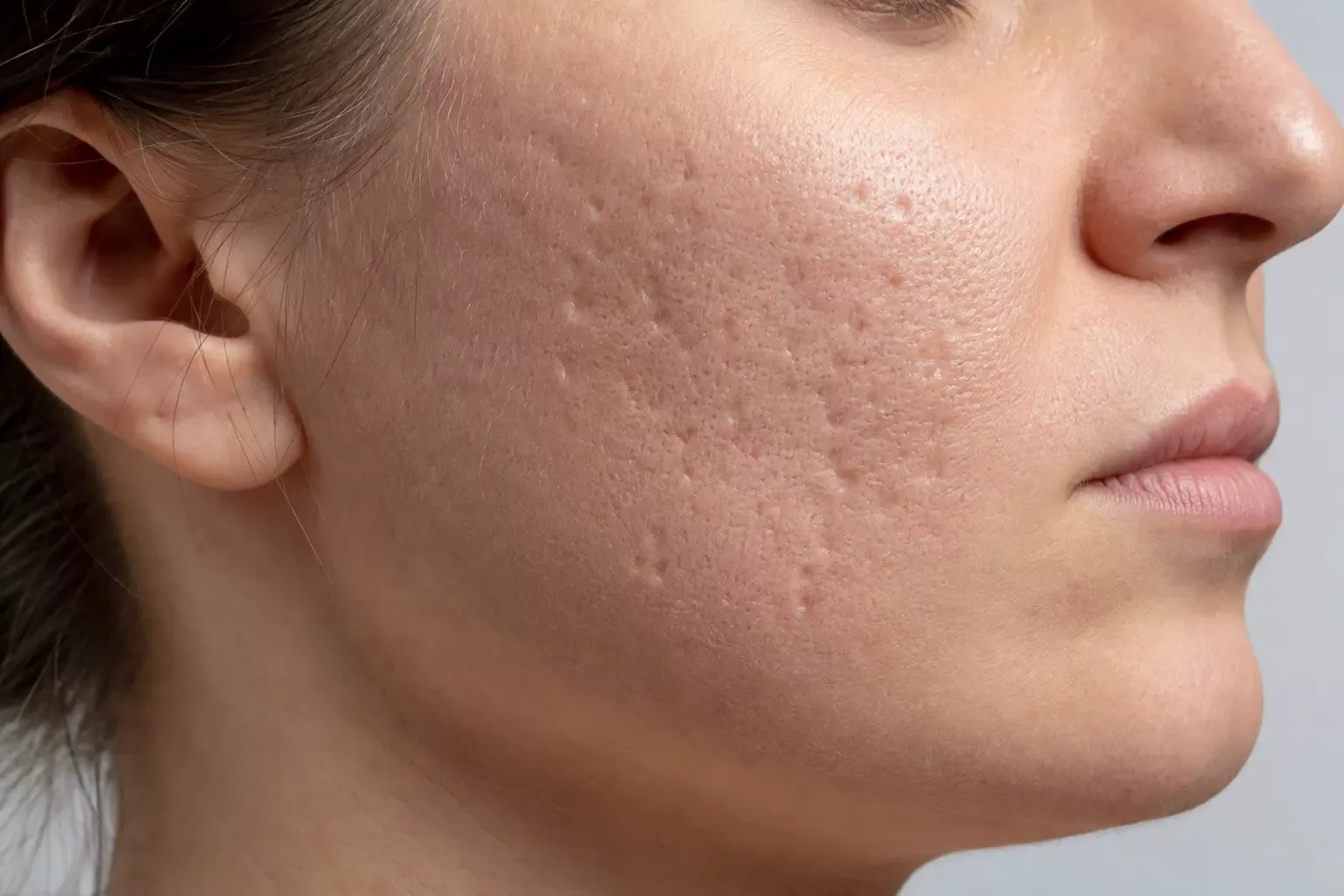
People often use the term “acne scar” for any mark that remains after a breakout. Clinically, however, colour change and true scarring are different problems. PIE and PIH can both remain after an inflamed pimple has flattened, while an acne scar involves a structural change in the skin—such as an ice-pick opening, a boxcar depression, a rolling hollow or a raised scar.
This distinction matters because treatment should match the target. Vascular redness involves haemoglobin and superficial vessels. Brown or grey marks involve melanin. Indented scars involve altered collagen and skin architecture. Treating all three as though they are the same can lead to disappointing results or unnecessary irritation.
It is also common to have more than one issue in the same area. A single former acne lesion may leave a red edge, a brown centre and a shallow indentation. The correct plan may therefore be staged rather than based on one device or one session.
What Is Post-Inflammatory Erythema (PIE)?
Post-inflammatory erythema is the medical term used for flat pink, red or purple marks that remain after inflammation settles. Acne is a common trigger, although other inflammatory skin events may also leave temporary erythema.
PIE is linked to vascular change rather than excess pigment. After an inflamed acne lesion heals, superficial vessels can remain dilated or more visible for a period of time. This is why the mark looks red rather than brown. PIE is often more obvious in lighter skin tones, although vascular redness can occur across skin types and may look more purple or muted in deeper complexions.
PIE can gradually fade, but the timeline varies. Repeated breakouts, picking, heat, irritation and unprotected sun exposure can make the overall pattern appear more persistent. A correct assessment should also rule out active acne, rosacea, visible capillaries or general facial flushing, because these may overlap with post-acne redness but require a different plan.
What Is Post-Inflammatory Hyperpigmentation (PIH)?
Post-inflammatory hyperpigmentation describes flat tan, brown, dark brown or grey marks caused by increased melanin after inflammation. When acne, irritation or picking activates inflammatory pathways, melanocytes may produce and distribute more pigment in the affected area.
PIH is especially common and often more persistent in medium-to-deep skin tones, but it can affect any complexion. The colour can give a clue to depth: superficial pigment often appears tan to brown, while deeper pigment may look grey-brown. Colour alone is not enough to plan a laser treatment, which is why skin type, recent sun exposure, active inflammation and the depth of pigment must be considered together.
PIH is not the same as melasma. PIH follows a specific inflammatory event, while melasma is a more complex and recurring pigment condition influenced by light, hormones, heat and individual predisposition. Treating presumed PIH aggressively when the pattern is actually melasma may make the condition harder to control.
PIE · FLAT RED / PINK MARKS 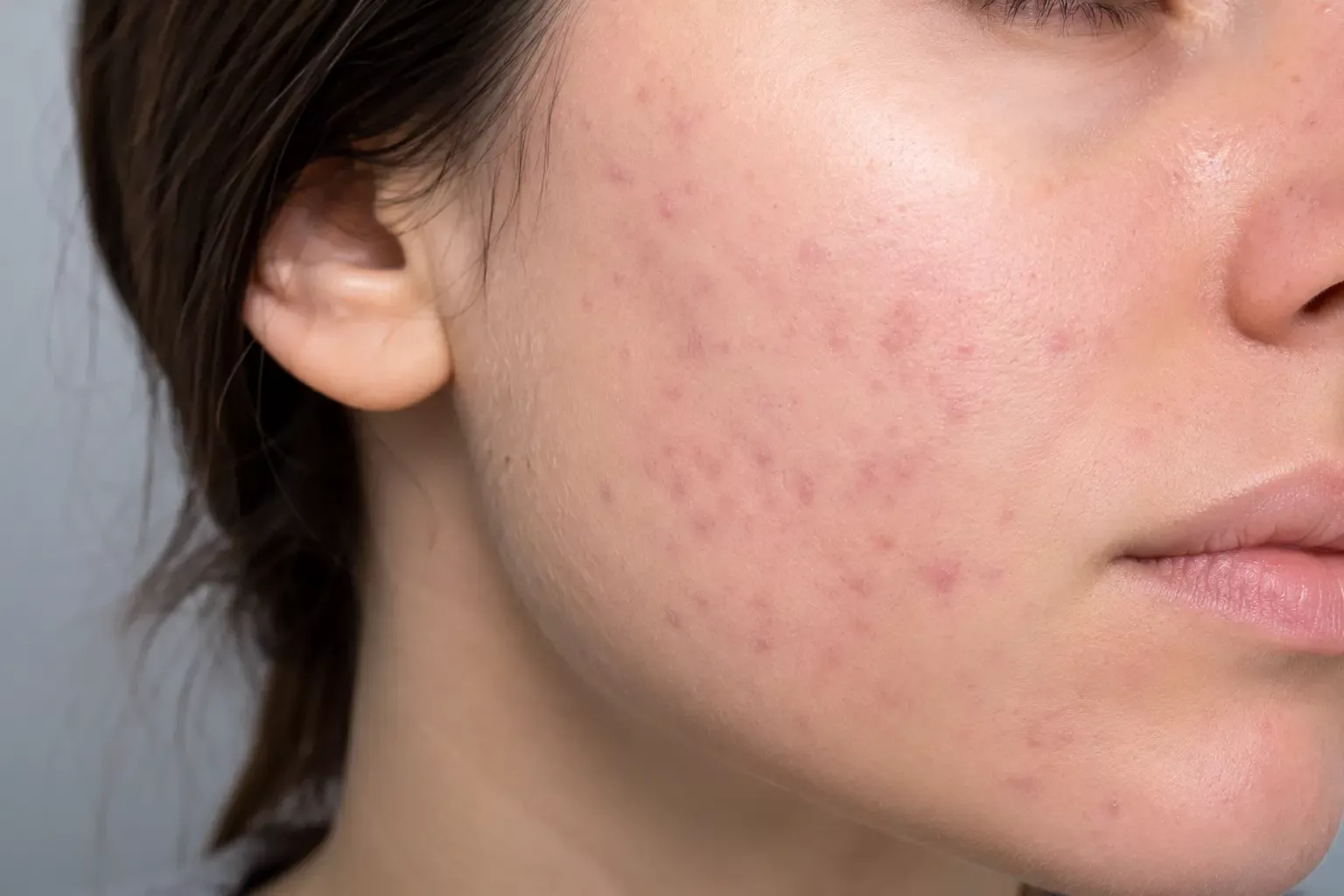
Vascular colour change; the surface remains flat. | PIH · FLAT BROWN / GREY-BROWN MARKS 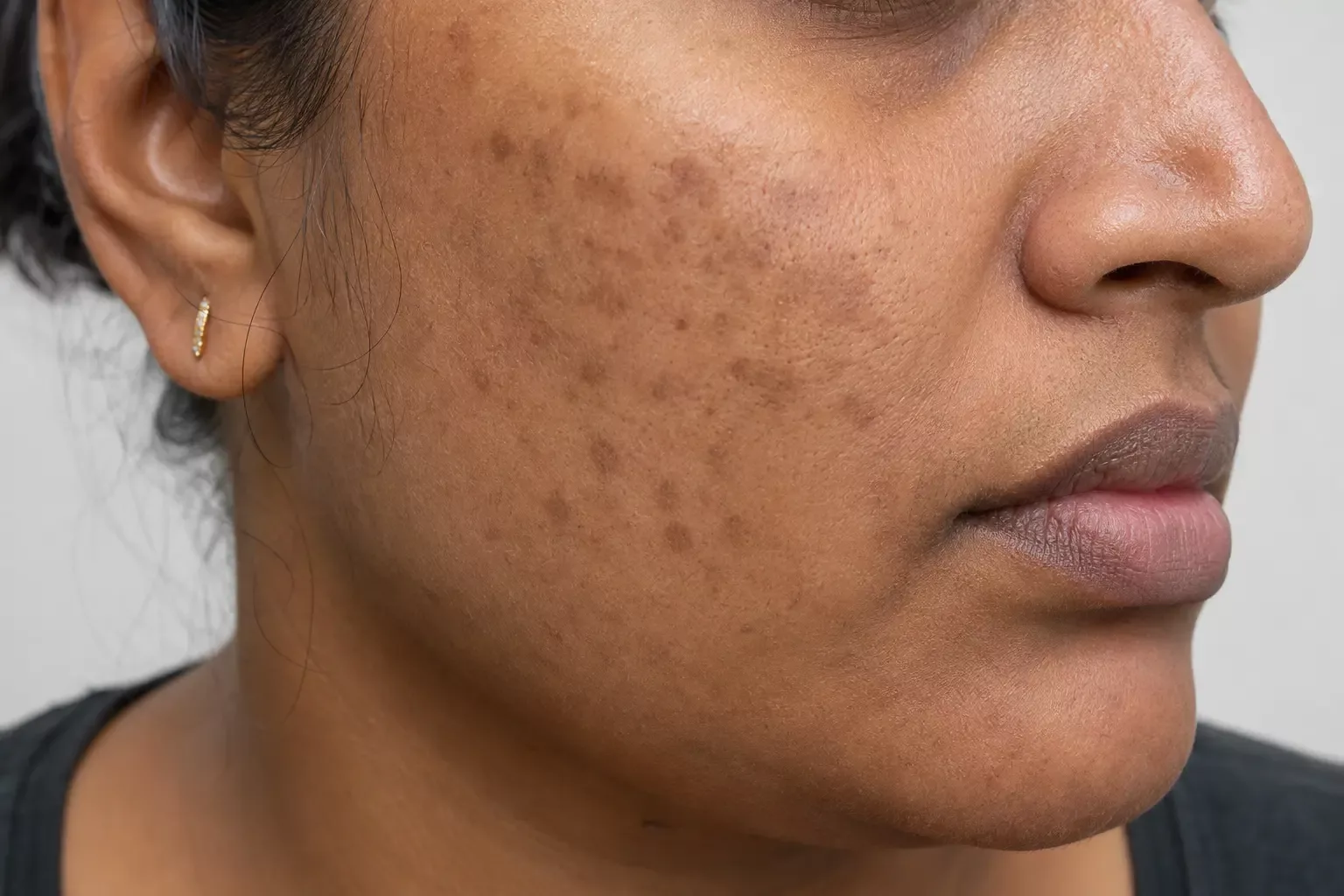
Melanin-based colour change; the surface remains flat. |
Illustrative skin images; not before-and-after treatment results.
PIE vs PIH vs True Acne Scars
Concern | Typical appearance | Main target | Treatment direction |
PIE | Flat pink, red or purple mark | Visible vascular redness / haemoglobin | Barrier care, sun protection and selected vascular light-based treatment |
PIH | Flat tan, brown, dark brown or grey mark | Excess melanin after inflammation | Pigment-safe skincare and carefully selected pigment treatment |
True scar | Indented, enlarged-pore-like or raised texture | Altered collagen and tissue structure | Scar-type assessment, collagen remodelling or resurfacing |
Assessment note: colour, texture and current inflammation can overlap. A diagnosis should not be made from an online photo alone.
Why Treatment Must Match Colour and Depth
Light- and laser-based devices work through selective targets. A vascular treatment is designed around absorption by haemoglobin, while a pigmentation treatment is chosen around melanin, wavelength, pulse delivery and pigment depth. RF microneedling and fractional resurfacing work differently again by creating controlled stimulation for collagen remodelling.
This is the reason a treatment that helps a red mark may do little for an indentation, and a treatment intended for brown pigment may not be the best first choice for vascular redness. It is also why stronger does not automatically mean better. Excess heat or irritation may prolong redness or trigger further pigmentation, particularly in PIH-prone skin.
Step 1: Control Active Acne and Protect the Skin Barrier
The most effective way to reduce future acne marks is to reduce new inflammatory breakouts. If acne is still active, the first priority is usually a plan that addresses the breakout pattern rather than repeatedly treating marks while new ones continue to form.
Gentle cleansing, non-comedogenic moisturising and daily broad-spectrum sunscreen support the skin while it recovers. Avoid squeezing or picking. For persistent or significant acne, seek medical advice; prescription treatments are outside the scope of a cosmetic skin consultation and should be managed by an appropriate medical practitioner.
Step 2: Consider the Right Approach for Red Acne Marks
When flat red marks are confirmed as PIE, time, barrier support and sun protection may be enough for mild cases. If redness remains persistent, a practitioner may consider a vascular light-based treatment after assessing skin type, current acne, medications, recent tanning and the risk of post-treatment pigment change.
At BalaBala Laser Clinic, Icon IPL is one available option for selected redness and visible vascular concerns. IPL uses a spectrum of light rather than one laser wavelength; filters and settings are chosen according to the target. Icon IPL is generally best suited to lighter skin tones, and suitability must be confirmed during consultation. It is not automatically the correct choice for every red mark or every complexion.
Step 3: Consider the Right Approach for Brown Acne Marks
PIH management starts with preventing further inflammation and protecting the area from ultraviolet and visible light. Depending on skin type and tolerance, a clinician may recommend a gradual skincare plan using ingredients that support pigment regulation. Irritation should be avoided because it can create another inflammatory cycle.
For selected pigment concerns, BalaBala offers PicoSure and Fotona StarWalker. PicoSure uses 755 nm picosecond technology, while Fotona StarWalker provides multiple wavelengths and pulse modes. The appropriate platform depends on the colour and depth of pigment, skin type, recent sun exposure and whether the presentation is truly PIH rather than melasma or another pigment condition.
Laser treatment for PIH requires caution. Published evidence shows that energy-based treatments can improve some cases, but they can also worsen pigmentation when treatment selection or parameters are not appropriate. Conservative planning, preparation where needed and strict aftercare are therefore part of the treatment—not optional extras.
Step 4: Treat Texture Separately When a True Scar Is Present
If the skin is indented or raised, fading the colour will not fully correct the texture. Atrophic scars need to be classified by pattern and depth. Options may include Vivace RF Microneedling, Fotona Fractional Laser Resurfacing or a staged combination plan, depending on the scar type, skin tone, recovery preference and presence of active acne.
A useful treatment plan separates three goals: calm active inflammation, reduce residual colour and remodel true scarring. Doing everything at once is not always the safest or most efficient sequence.
Why BalaBala’s Multi-Technology Approach Matters
BalaBala Laser Clinic does not rely on one platform for every post-acne concern. The clinic offers Icon IPL for selected vascular redness, PicoSure and Fotona StarWalker for different pigmentation patterns, and Vivace RF Microneedling or Fotona Fractional Resurfacing for textural scarring. VISIA Skin Analysis and an in-person consultation help identify the dominant target before a treatment plan is recommended.
The advantage of a broader technology range is not simply having more machines. It allows the treatment plan to follow the biology of the concern: haemoglobin for redness, melanin for pigment and collagen architecture for scarring. Where several targets are present, treatments can be sequenced to reduce unnecessary irritation and support more consistent, natural-looking improvement.
How Long Do Red and Brown Acne Marks Take to Fade?
There is no universal timeline. Mild PIE or PIH may soften gradually over weeks or months, while persistent marks can remain longer. Skin tone, depth of inflammation, ongoing acne, sun exposure, picking, skincare irritation and treatment history all influence the rate of improvement.
Professional treatment does not make every mark disappear immediately. A course of treatment, consistent home care and review appointments may be needed. The expected number of sessions and downtime should only be estimated after assessment because individual response varies.
Frequently Asked Questions
How can I tell whether an acne mark is PIE or PIH?
PIE is usually flat and pink, red or purple. PIH is usually flat and tan, brown, dark brown or grey. If the skin is indented or raised, a true scar may also be present. Mixed colour and texture are common, so an in-person assessment is more reliable than self-diagnosis.
Are red and brown acne marks permanent?
Both PIE and PIH can fade naturally, but the timeline varies and some marks remain visible for many months. Continued breakouts, picking, sun exposure and irritation can prolong them. True textural scars are less likely to resolve without targeted treatment.
Can IPL help red acne marks?
IPL may be considered for selected vascular redness because its light can target haemoglobin. It is not suitable for every skin type or every red mark. BalaBala uses Icon IPL after assessing the cause of redness, skin tone and risk factors.
Can PicoSure help brown acne marks?
PicoSure may be considered for selected melanin-based pigmentation. Suitability depends on pigment depth, skin type, recent sun exposure and whether the condition is PIH, melasma or another form of pigmentation. Conservative settings and aftercare are important.
Can PIE, PIH and acne scars be treated in the same plan?
Yes, but they may not be treated with the same device or at the same appointment. A staged plan can address active acne first, then redness or pigment, followed by textural scar remodelling where appropriate.
Does sunscreen really matter for acne marks in Adelaide?
Yes. Ultraviolet and visible light can make PIH more noticeable, and sun exposure can also complicate recovery after energy-based treatments. Daily broad-spectrum sunscreen, sensible shade and avoiding tanning are important parts of prevention and aftercare.
Should active acne be treated before acne marks?
Usually, yes. Reducing active inflammatory acne helps prevent new PIE, PIH and scars. Significant or persistent acne may require assessment by a GP or dermatologist, particularly when prescription treatment is needed.
Book a Personalised Acne-Mark Assessment in Adelaide
If your post-acne marks are red, brown, indented—or a combination—the first step is identifying what is actually present. BalaBala Laser Clinic uses VISIA Skin Analysis together with an in-person consultation to assess colour, texture, skin type and current inflammation before recommending treatment.
BalaBala Laser Clinic · Shop 1/65 Grenfell Street, Adelaide SA 5000 · (08) 7078 1806 · Book a consultation
Important information: This article provides general educational information and does not replace medical diagnosis or advice. Treatment suitability, risks, recovery and expected outcomes vary between individuals and must be discussed during consultation. Results cannot be guaranteed.