


PRF Hair Treatment Adelaide: How It Works, Who It May Suit and What to Expect
Noticing a wider part, a thinner ponytail or more scalp showing under bright light can be unsettling. Hair thinning is also more complex than it first appears. Genetics, hormones, stress, illness, nutrition, scalp conditions and hair-care practices can all play a role, and the right plan depends on the cause.
PRF hair treatment in Adelaide is one option some people explore when they want a non-surgical, assessment-led approach to early or progressive thinning. PRF—short for platelet-rich fibrin—is prepared from a small sample of the patient’s own blood and placed into selected areas of the scalp. It is intended to expose the local tissue to a concentrated mixture of platelets within a fibrin matrix. Research is still developing, so PRF should be presented as a potential supportive treatment, not a guaranteed way to regrow hair.
At BalaBala Laser Clinic, the starting point is not a treatment menu. It is a consultation: looking at the pattern and history of your thinning, assessing the scalp and deciding whether PRF is reasonable—or whether medical assessment should come first.
THE SHORT ANSWER PRF may be considered for selected adults with early or progressive thinning where follicles are still present. Suitability, response and timing vary. Sudden, patchy, inflamed or unexplained hair loss should be medically assessed before cosmetic treatment. |
Why Hair Thinning Needs an Assessment First
“Hair loss” is not one diagnosis. Two people can have similar-looking thinning for very different reasons, and a cosmetic procedure cannot replace investigation of an underlying health or scalp condition.
Common patterns include gradual male or female pattern hair loss, temporary shedding after a physical or emotional stressor, traction from repeated tight styling, inflammatory or infectious scalp conditions, and patchy autoimmune or scarring forms of alopecia. There can also be more than one factor at the same time.
Before discussing PRF, a useful consultation should consider:
- when the shedding or thinning began and whether it is stable, gradual or sudden;
- the location and pattern of change, including the hairline, part and crown;
- scalp symptoms such as pain, burning, itching, scale, redness or sores;
- recent illness, major stress, pregnancy or postpartum changes, weight change and new medicines;
- family history, hair-care practices and previous treatments; and
- whether a GP or dermatologist should assess possible medical, hormonal, nutritional, infectious or inflammatory causes.
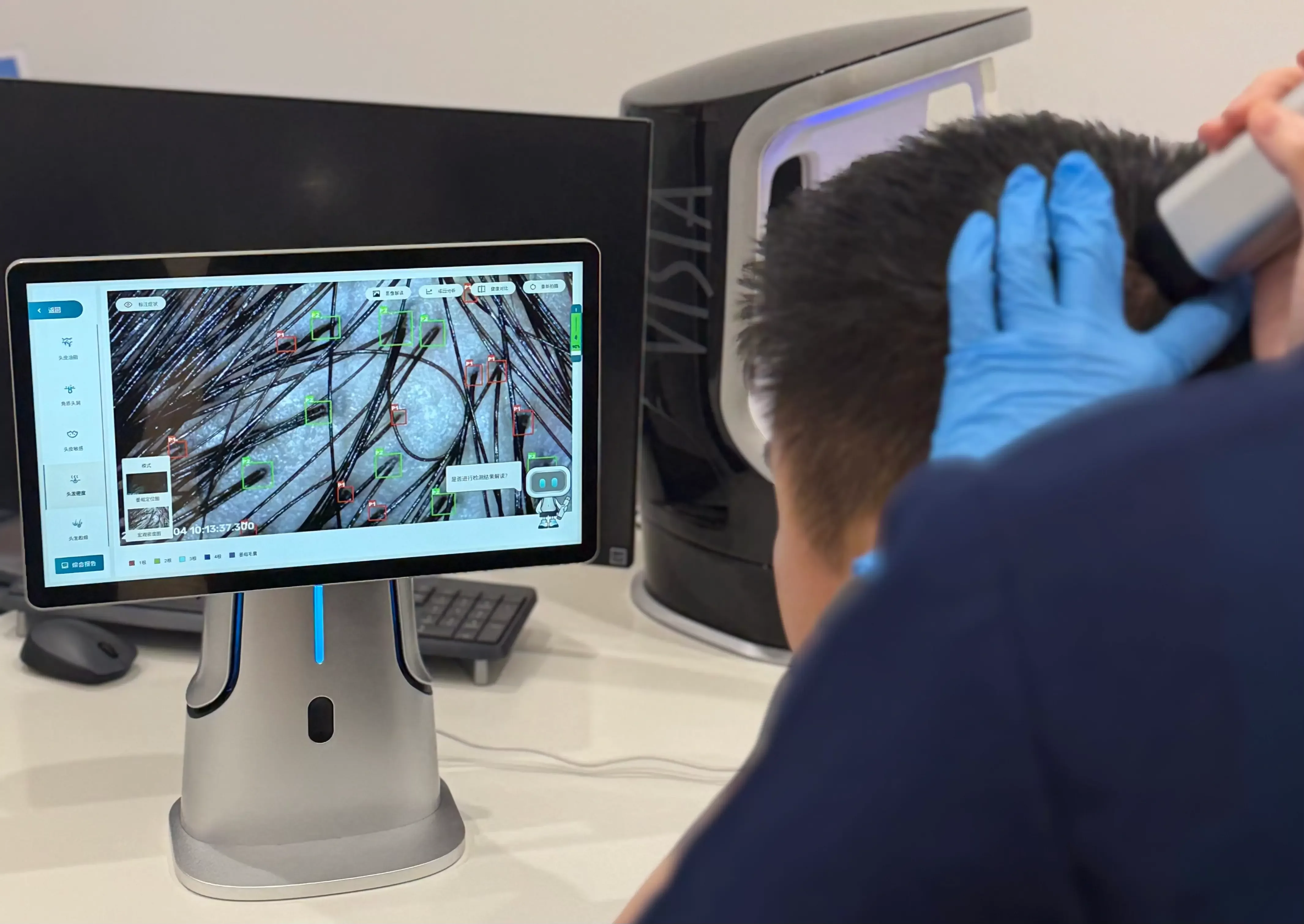
Standardised photographs or scalp imaging, where appropriate, can help establish a baseline. They are useful for tracking—not for promising a particular outcome.
What Is PRF Hair Treatment?
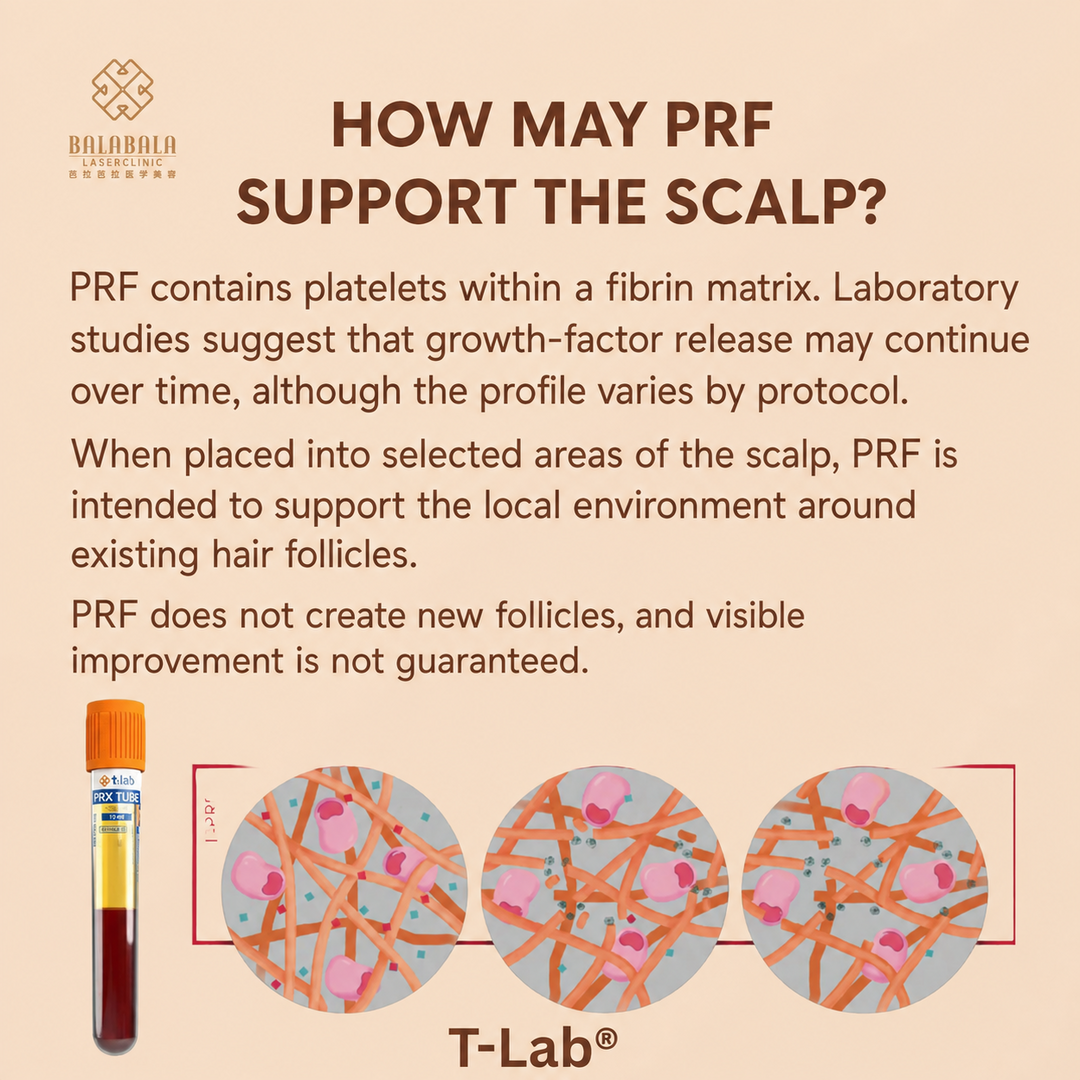
Platelet-rich fibrin is an autologous blood-derived preparation, meaning it is prepared from the same person who receives it. A small amount of blood is collected and processed by centrifugation according to the clinic’s protocol. The separated platelet-rich fraction contains a fibrin matrix along with platelets and other blood components. The prepared product is then placed into targeted areas of the scalp by a trained practitioner under the appropriate clinical supervision.
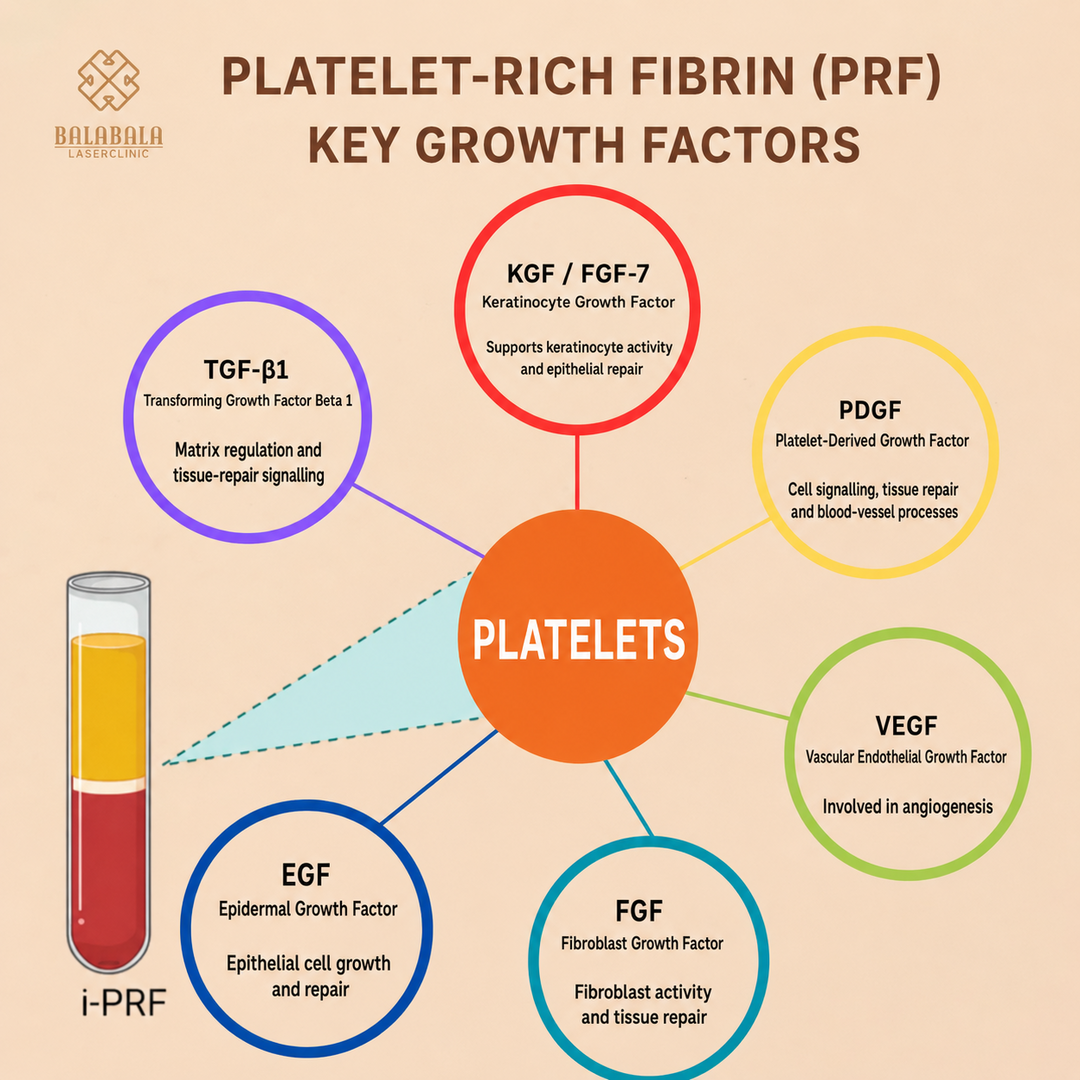
Platelets are best known for their role in clotting, but they also contain signalling proteins involved in tissue processes. The proposed rationale for scalp PRF is that these local signals may support the environment around existing follicles. However, PRF does not create new follicles, cannot guarantee that miniaturised follicles will recover and is unlikely to replace hair where follicles are no longer viable.
PRF vs PRP for Hair: What Is the Difference?
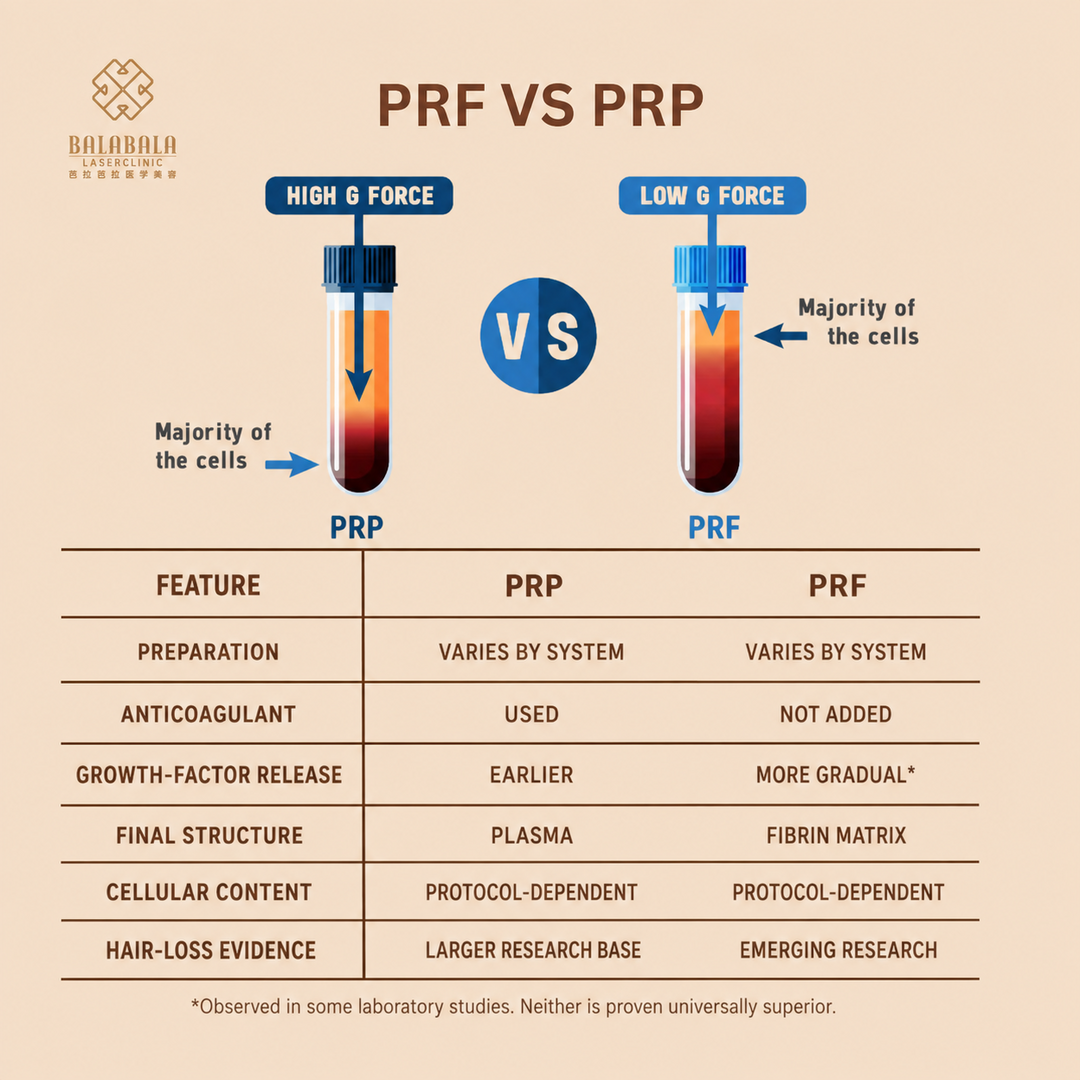
PRF and PRP both begin with the patient’s own blood, but the preparation is not identical. Protocols also vary between systems, so a simple label does not tell you the exact platelet concentration or biological profile of a finished sample.
Feature | PRF | PRP |
Blood collection | Typically prepared without adding an anticoagulant. | Blood is collected with an anticoagulant to prevent clotting. |
Structure | Contains a fibrin matrix or scaffold. | A platelet-rich plasma fraction. |
Processing | Requires timely processing; the exact protocol varies. | Processing steps and platelet concentration vary by system. |
Hair-loss evidence | Promising but still limited; studies are comparatively small and protocols vary. | A larger research base exists, but results and protocols are still heterogeneous. |
Bottom line | May be considered after assessment; not proven to be universally superior. | May also be considered after assessment; suitability is individual. |
The practical question is not “Which acronym sounds newer?” It is whether the proposed treatment is appropriate for your pattern of thinning, is performed within a suitable clinical framework and comes with realistic expectations. Current research does not justify a blanket claim that PRF is better than PRP for every person.
How May PRF Support Thinning Hair?
The proposed benefit of PRF is supportive rather than reconstructive. In selected cases, it may help improve the environment around existing follicles and may be associated with changes in perceived shedding, hair quality or density over time. Individual studies and reviews have reported encouraging findings in androgenetic alopecia, but the PRF evidence base remains emerging. Study sizes, preparation methods, treatment schedules and outcome measures differ, which makes precise predictions difficult.
This distinction matters. “Promising” does not mean “proven for everyone”. A responsible treatment discussion should include the possibility of little or no visible change, the cost of a treatment series, the need for review, and whether other medical or cosmetic options may be more suitable.
Who May Be Considered for PRF Hair Treatment?
Following an appropriate assessment, PRF may be discussed with adults who have:
- early or progressive pattern thinning rather than a completely smooth bald area;
- visible miniaturisation or reduced density where follicles are still present;
- a stable scalp without active infection or uncontrolled inflammation;
- realistic expectations about gradual, variable change; and
- an interest in a non-surgical option that may sit within a broader hair-loss plan.
Both women and men may be assessed. Gender alone does not determine suitability—the cause, pattern, stage, scalp health, medical history and treatment goals are more important.
When Should Medical Assessment Come First?
PRF should not be used to delay diagnosis. See a GP or dermatologist before cosmetic treatment if your hair loss is sudden, rapidly progressing, patchy or associated with scalp pain, burning, bleeding, significant redness, scale, pustules or scarring. Medical review is also important if you feel unwell, are losing hair elsewhere on the body, have relevant hormonal symptoms, or suspect a medicine or recent health event may be contributing.
A medical practitioner may recommend examination, blood tests, dermoscopy, biopsy or other investigations depending on the presentation. If an underlying condition is identified, managing that condition may be the priority.
IMPORTANT A cosmetic consultation can document the pattern of thinning and discuss service suitability, but it is not a substitute for medical diagnosis. Where the presentation is unclear or concerning, referral is the safer next step. |
What Happens During a PRF Hair Appointment at BalaBala?
The exact sequence depends on BalaBala’s current protocol and your treatment plan, but a PRF scalp appointment generally includes the following steps:
- Consultation and baseline assessment. Your practitioner reviews the history and pattern of thinning, examines the scalp, discusses previous treatment and checks whether referral or further information is needed.
- Preparation. Consent, relevant medical screening and pre-treatment instructions are reviewed. Baseline photographs or imaging may be recorded with your permission.
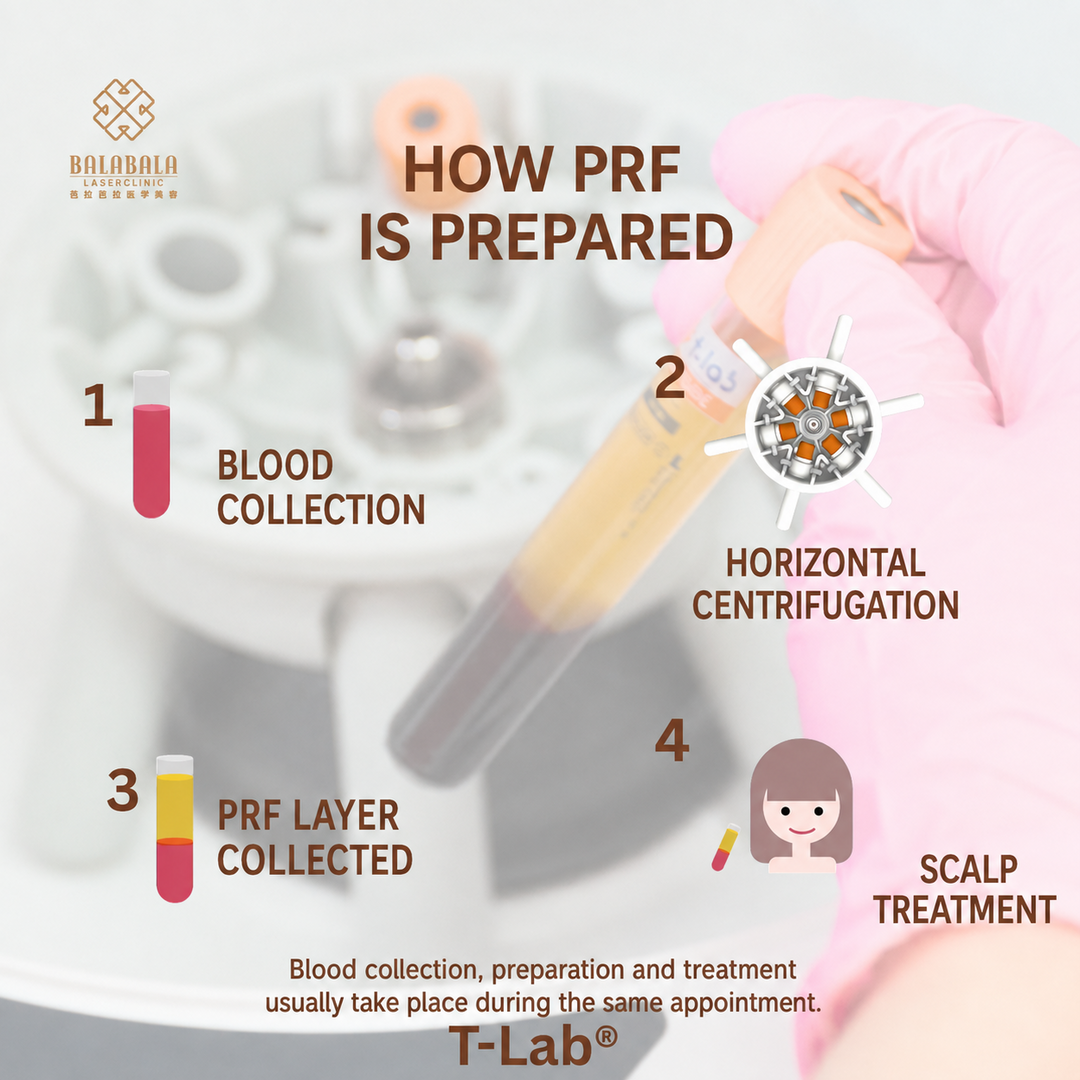
- Blood collection and processing. A small blood sample is collected and centrifuged promptly using the clinic’s PRF protocol. Because preparation systems vary, ask your practitioner to explain the process used at BalaBala.
- Targeted scalp treatment. The prepared PRF is placed into selected areas of the scalp. The method, depth and spacing are determined by the treating practitioner.
- Aftercare and review. You receive instructions about washing, exercise, hair products and what to do if you have unexpected symptoms. Progress should be reviewed using the same lighting, angles and measurements where possible.
Does PRF Hurt, and Is There Downtime?
Blood collection and multiple scalp placements can be uncomfortable. People describe pressure, pinching, stinging or scalp tenderness, and tolerance varies. Ask during consultation what comfort measures may be appropriate for you and whether they could affect the procedure.
Temporary redness, tenderness, tightness, mild swelling, pinpoint bleeding or bruising can occur. Some people return to normal activities quickly, while others prefer a quieter day. Follow the aftercare given by your practitioner rather than relying on generic online advice.
Possible Risks and Limitations
PRF is prepared from the patient’s own blood, but “autologous” does not mean risk-free. Potential risks related to blood collection and scalp treatment can include:
- pain, tenderness, swelling, bruising or bleeding;
- light-headedness or fainting during blood collection;
- temporary headache or scalp sensitivity;
- infection, although appropriate infection-control practices are intended to minimise this risk;
- injury to local structures or an unexpected inflammatory response;
- temporary shedding or no meaningful cosmetic improvement; and
- dissatisfaction, particularly when expectations or baseline documentation are unclear.
Suitability may be affected by pregnancy or breastfeeding, active scalp infection, certain blood or platelet conditions, immune or healing disorders, some medicines and supplements, or other medical factors. This is not a complete contraindication list. Do not stop prescribed medicines unless the prescribing clinician tells you to do so.
How Many Sessions Are Needed, and When Might Change Be Visible?
There is no universal PRF schedule. Research protocols vary, and the right plan depends on the cause and stage of thinning, the practitioner’s protocol, response to earlier sessions, budget and whether other management is required. A series followed by review or maintenance may be discussed, but a fixed package should not replace individual assessment.
Hair grows in cycles, so meaningful assessment takes time. Early changes—if they occur—may involve less perceived shedding or a change in hair quality before density is easier to see. Review over several months is more useful than judging the result in the first few weeks. Standardised photography helps reduce the effect of lighting, styling and hair length on comparisons.
If there is no objective improvement, the plan should be reconsidered rather than continued automatically. Progress can also be affected by ongoing genetics, hormones, illness, stress, scalp inflammation and adherence to any broader plan recommended by an appropriate clinician.
Can PRF Be Combined with Other Hair-Loss Strategies?
Sometimes—but combination planning should follow the diagnosis or likely cause. Depending on the situation, a practitioner may recommend medical assessment, scalp care, changes to damaging hair practices, correction of an identified deficiency, or discussion of evidence-based medical options with a GP or dermatologist. The sequence matters, especially when the scalp is inflamed or the hair loss is rapidly changing.
Avoid adding multiple treatments at once simply to make a plan look more comprehensive. A staged approach makes it easier to assess tolerance, cost and whether any component is helping.
What Sets BalaBala’s PRF Hair Protocol Apart?
PRF is not one completely standardised product. The final preparation can be influenced by the collection tube, rotor design, relative centrifugal force, spin time, temperature and handling. This means the equipment and preparation protocol matter alongside consultation, scalp assessment and practitioner technique.
BalaBala Laser Clinic uses the T-Lab® PRF system with a swing-out rotor centrifuge. During centrifugation, the tube swings from an upright position into a horizontal position. By contrast, tubes in a fixed-angle rotor remain tilted throughout the spin. T-Lab describes its horizontal swing-out rotor as supporting more even sample separation, while its PRX protocol prepares PRF without adding an anticoagulant.
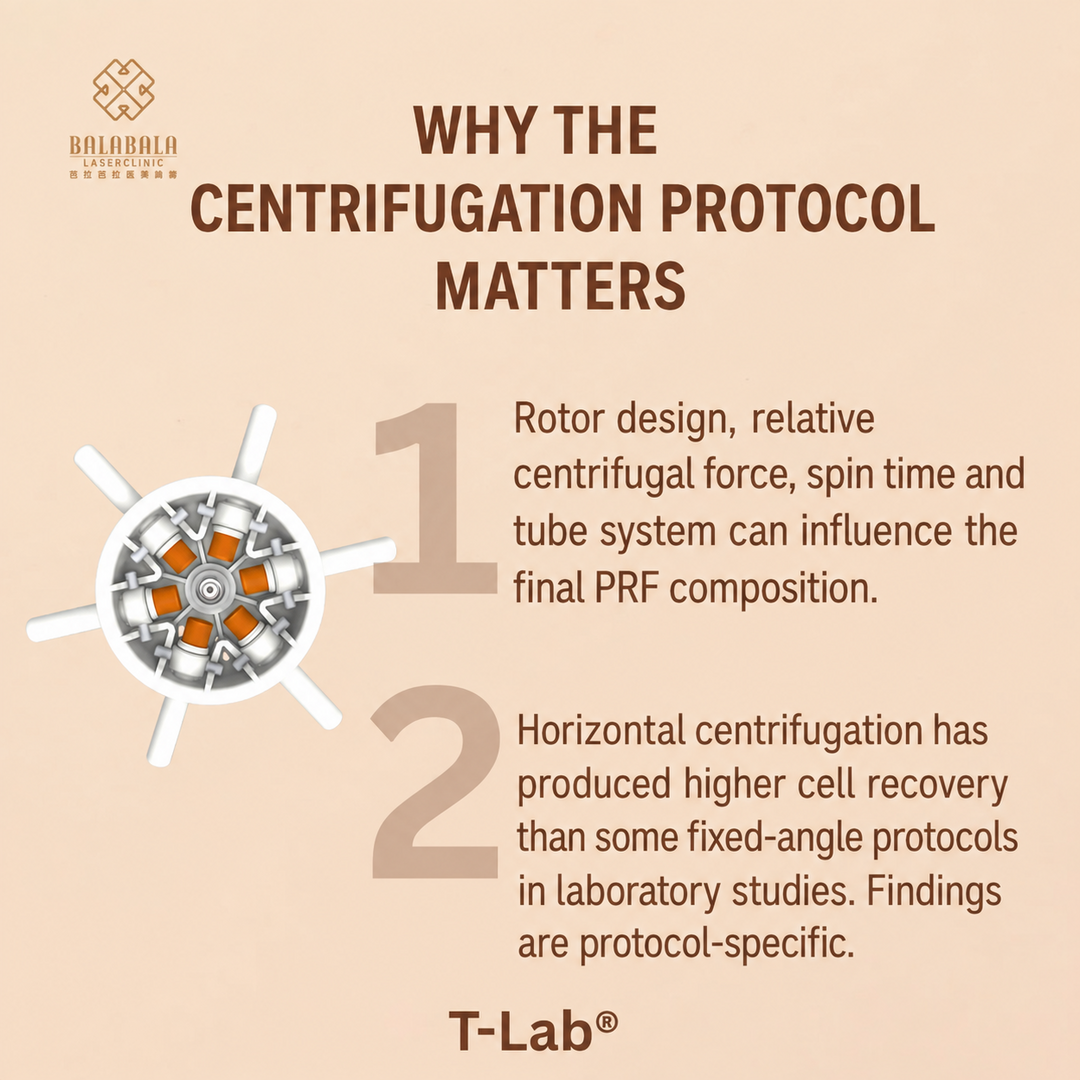
Why may horizontal centrifugation matter?
In a laboratory study comparing selected PRF protocols, horizontal centrifugation produced a more even distribution of cells and higher platelet and leukocyte recovery than the fixed-angle protocols tested, with increases of up to approximately 3.5 times in that study. This is a technical finding about the preparations that were tested. It does not prove that every horizontal system is superior in every setting, or that it will produce more hair growth for every patient.
THE BALABALA DIFFERENCE T-Lab® swing-out rotor technology • protocol-controlled PRF preparation • assessment-led scalp planning • personalised placement • standardised progress reviews |
Equipment is only one part of a responsible PRF hair plan. At BalaBala, treatment begins with the pattern and history of thinning, scalp condition, relevant health factors and realistic goals. For suitable clients, PRF can then be prepared promptly according to the selected T-Lab protocol, placed into targeted scalp areas and reviewed using consistent photography or imaging where appropriate.
If hair loss is sudden, patchy, painful, inflamed or medically unexplained, referral for GP or dermatologist assessment should come before cosmetic treatment. This assessment-first approach is important because early pattern thinning, temporary shedding and inflammatory or scarring hair loss can look similar—but they do not call for the same response.
Frequently Asked Questions
Does PRF regrow hair?
PRF may support the environment around existing follicles in selected people, but it does not create new follicles and cannot guarantee regrowth. Outcomes vary with the cause, stage and duration of hair loss, scalp health and individual response.
Is PRF better than PRP for hair loss?
Not conclusively. PRF and PRP differ in preparation, and PRF has a fibrin matrix, but current evidence does not establish that PRF is universally superior. PRP has a larger research base; PRF research is promising but comparatively limited and heterogeneous.
Can women and men have PRF hair treatment?
Potentially, yes. Suitability depends on the pattern and cause of thinning, medical history, scalp condition and whether follicles are still present—not gender alone.
Can PRF treat a receding hairline?
It may be considered where there are still miniaturised hairs or viable follicles. A smooth area with long-standing advanced loss is less likely to respond. An assessment is needed before setting expectations.
How many PRF hair sessions will I need?
There is no single schedule that suits everyone. Your practitioner may discuss a treatment series and review points based on the presentation and clinic protocol. Continuing treatment should depend on safety, tolerance and objective progress.
How long does PRF take to work?
Hair-cycle changes are gradual. If improvement occurs, it is generally assessed over months rather than days or weeks. Consistent photography and review are more reliable than day-to-day observation.
Is there downtime after scalp PRF?
Downtime is usually limited, but temporary redness, tenderness, swelling, bruising or pinpoint bleeding can occur. Your individual recovery and aftercare instructions should be discussed before treatment.
Is PRF hair treatment safe?
PRF is prepared from your own blood, but the blood draw and scalp procedure still carry risks. Suitability screening, infection control, appropriate clinical supervision, informed consent and clear aftercare are important.
Book a PRF Hair Consultation in Adelaide
If you are noticing gradual thinning, a wider part or reduced density, the next useful step is an assessment—not a promise. BalaBala Laser Clinic can discuss whether PRF is reasonable for your presentation, what results would be realistic and whether medical assessment should come first.
Learn more about PRF at BalaBala Laser Clinic or contact the Adelaide clinic to arrange a consultation.
GENERAL INFORMATION ONLY This article is educational and does not diagnose a condition or replace medical advice. Individual suitability, risks, treatment protocols and outcomes vary. Seek medical assessment for sudden, patchy, painful, inflamed or unexplained hair loss. |
Evidence and Regulatory References
2. Therapeutic Goods Administration. Advertising health services that involve therapeutic goods.
6. Healthdirect Australia. Alopecia (Hair loss).
7. Healthdirect Australia. Female pattern hair loss.
8. Healthdirect Australia. Male pattern baldness.
EVIDENCE NOTE The PRF literature is developing. Small samples, differing preparation methods and varied outcome measures limit certainty. Healthdirect advises that evidence for plasma injections in hair loss remains insufficient. The article therefore uses cautious “may support” language and recommends medical assessment where appropriate. |